Trabecular Bone Score (TBS): Maximize Reimbursement with Accurate Coding
Introduction to Trabecular Bone Score (TBS)
Four new category I CPT codes were issued in January 2022 to report Trabecular Bone Score (TBS) procedures. TBS procedures rely on dual x-ray absorptiometry (DXA) imaging and are usually performed alongside Bone Mineral Density (BMD) exams. If your facility offers DXA exams, you may sooner or later have to file claims for TBS. Understanding how to use these new codes properly can help you avoid common denial reasons.
What is Trabecular Bone Score?
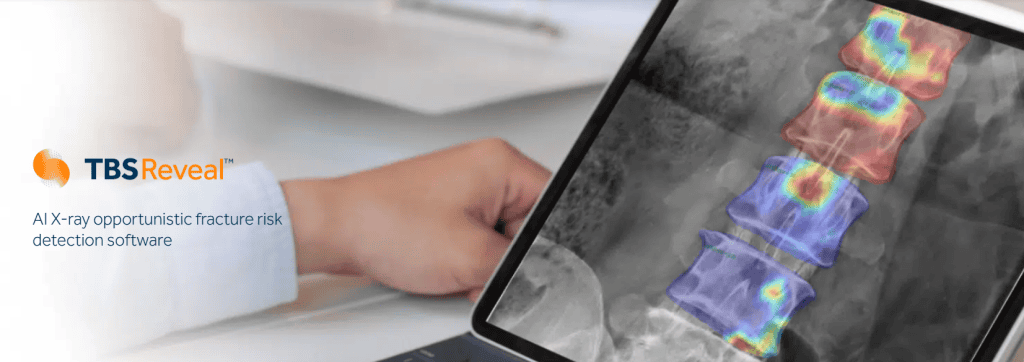
Trabecular Bone Score (TBS) is a software tool that provides insights into the quality of the bone microarchitecture in the lumbar vertebrae. This software analyzes images generated during a BMD test and produces an additional quantitative output, the Trabecular Bone Score. Physicians utilize TBS alongside BMD results to enhance their understanding of patients’ bone health and improve fracture risk predictions. It serves as an aid in diagnosing osteoporosis. The TBS software is typically installed on the DXA workstation but may not be equipped on all devices by default.TBS CPT codes
| 77089 | Global | Trabecular bone score (TBS), structural condition of the bone microarchitecture; using dual X-ray absorptiometry (DXA) or other imaging data on gray-scale variogram, calculation, with interpretation and report on fracture-risk. |
| 77090 | Technical only | Trabecular bone score (TBS), structural condition of the bone microarchitecture; technical preparation and transmission of data for analysis to be performed elsewhere |
| 77091 | Technical only | Trabecular bone score (TBS), structural condition of the bone microarchitecture; technical calculation only |
| 77092 | Professional only | Trabecular bone score (TBS), structural condition of the bone microarchitecture; interpretation and report on fracture-risk only by other qualified healthcare provider |
Select the correct code to avoid denials
Most coders dealing with TBS procedures will already be familiar with CPT 77080 for Bone Mineral Density, the most common procedure performed on DXA devices. While modifiers -TC and -26 denote the technical and professional components of the BMD examination, they cannot be used for TBS. Instead, make sure to use the dedicated codes for each component of TBS.
- The professional component of TBS, often billed alongside 77080-26, is represented by CPT 77092 and denotes the interpretation and report on fracture-risk.
- For the technical component to be reported alongside 77080-TC, two possibilities exist, either 77090 or 77091. In most cases, 77091 will be used as it represents the technical calculation of TBS. If your facility’s DXA device is equipped with the TBS software, 77091 is the correct choice.
- 77090 can only be used in cases where your facility’s DXA is not equipped with TBS and the image data is extracted from the DXA device and sent to be analyzed somewhere else. In practice, this is an extremely rare case.
- If you’re already billing for BMD globally, then simply use the corresponding global TBS code 77089.
Never append modifiers -TC or -26 to any TBS code as it may result in payment denial.
Written and Photo Source by Medimaps Group